


 6 / 52

For ordering information see inside back cover
4
Physical properties and chemical resistance of plastics
Polypropylene, PP
l
Translucent rigid polymer
l
Temperature range -20 to +135ºC
l
Autoclavable at 121ºC
l
Good to excellent chemical resistance
l
Resistant to fatigue making it tough
l
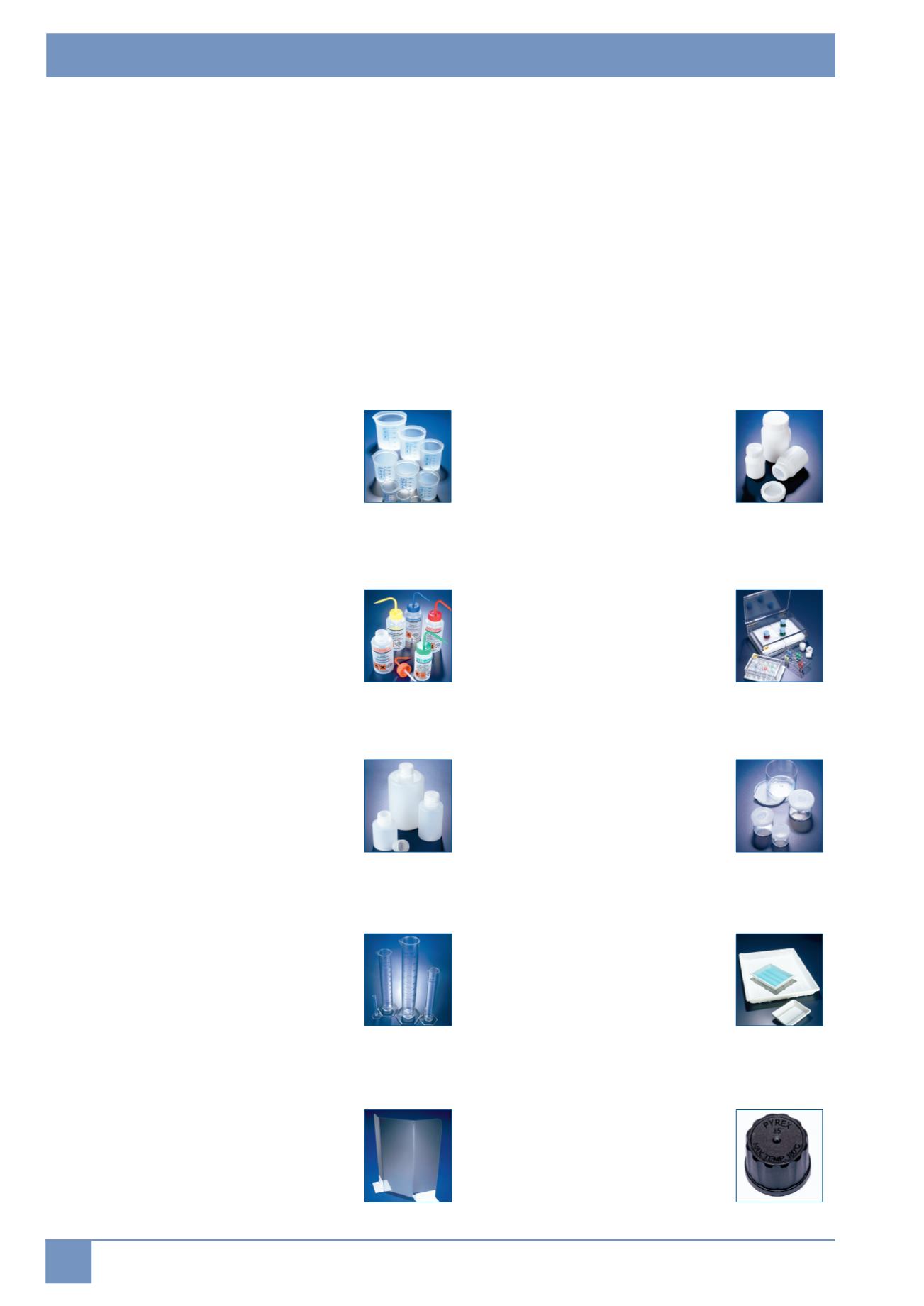
Typically used for beakers, bottles and cylinders
Low Density Polyethylene, LDPE
l
Translucent flexible polymer
l
Narrow temperature range of -50 to +80ºC
l
Not autoclavable at 121ºC
l
Good to excellent chemical resistance
l
Robust and virtually unbreakable
l
Typically used for wash bottles
High Density Polyethylene, HDPE
l
Translucent rigid polymer
l
Broad temperature range of -100 to +120ºC
l
Not autoclavable at 121ºC
l
Good to excellent chemical resistance
l
High tensile strength making it very tough
l
Typically used for bottles
Polymethylpentene, PMP (TPX)
l
Transparent rigid polymer
l
Broad temperature range -180 to +145ºC
l
Autoclavable at 121ºC
l
Good to excellent chemical resistance
l
Has a low density and a high clarity
l
Typically used for beakers and cylinders
Polycarbonate, PC
l
Transparent rigid polymer
l
Broad temperature range -135 to +135ºC
l
Autoclavable at 121ºC
l
Moderate chemical resistance
l
High impact strength
l
Typically used for safety shields
Polytetrafluoroethylene, PTFE
l
Opaque rigid polymer
l
Wide temperature range –200 to +260ºC
l
Autoclavable at 121ºC
l
Unrivalled resistance to almost all chemicals
l
Extremely low friction coefficient
l
Typically used for bottles, beakers and stirrers
Polymethylmethacrylate, Acrylic (PMMA)
l
Transparent rigid polymer
l
Narrow temperature range -60 to +50ºC
l
Not autoclavable at 121ºC
l
Moderate chemical resistance
l
Very tough and high clarity
l
Typically used for radiation shields
Polystyrene, PS
l
Transparent rigid polymer
l
Narrow temperature range -40 to +90ºC
l
Not autoclavable at 121ºC
l
Moderate chemical resistance
l
Brittle yet has excellent clarity
l
Typically used for container ware
Polyvinylchloride, PVC
l
Rigid polymer
l
Narrow temperature range -25 to +70ºC
l
Not autoclavable at 121ºC
l
Moderate chemical resistance
l
Rigid or flexible, coloured or clear
l
Typically used for trays and troughs
Polybutylene terephthalate, PBT
l
Opaque rigid polymer
l
Wide temperature range -40°C to +180°C
l
Autoclavable at 121°C
l
Mechanically strong engineering polymer
l
Good resistance to chemicals
l
Typically used for screw caps and connectors
Moderate resistance to common aqueous laboratory chemicals,
but avoid organic solvents, strong acids and bases
Good general resistance to a range of laboratory chemicals
including acids, bases and some solvents
Excellent resistance to most laboratory chemicals
Can be subjected to autoclaving at 121ºC without damage to
the polymer.
1
1
1
1
2
3
3
a
a
These icons provide a quick guide as to the chemical resistance of the polymers and can be found throughout the catalogue where appropriate.
Please note - where no resistance icon is shown, this product is made from several materials. In this instance please refer to the chemical resistance/
physical properties chart for each polymer.
1
2
2
2
2a
a
a